


|
| Book cover | Autor | Title | Description |
| Bild | Autor | Leer | Beschreibung |
| Date | Event | Tribe | Chief |
1765  | Spanish Missions 1769-1823 - King Charles III of Spain appointed Jose de Galvez as 'Inspector General' for New Spain (i.e. the entire Spanish territory in North and Central America). In the meantime, Russian explorers had appeared in North America and English settlers in the Ohio River valley. Galvez therefore considered it sensible to colonize the area that is now California. This was to keep the Russians and English out of Spanish territory. Galvez reached New Spain in July 1765.   | - | - |
| 3 February 1768 | Spanish Missions 1769-1823 - King Charles of Spain expelled the Jesuits from all Spanish colonies. In Mexico, the Jesuits were expelled from 16 missions. The king feared that the Jesuits could become too powerful. The Jesuits were replaced by a group of 15 Franciscans under the leadership of Father Junipero Serra. | - | - |
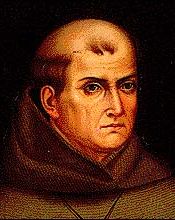 | |||
| Father Junipero Serra. Source: https://en.wikipedia.org/wiki/Jun?pero_Serra | |||
| 16 July 1769 | Spanish Missions 1769-1823 - The first Franciscan mission in California (then New Spain), the Mission Basilica San Diego de Alcala, was founded under the leadership of Father Junipero Serra in what is now the city of San Diego in south-western California. The Kumeyaay Indians lived in this area. The Franciscans believed that the conversion of the Indians to the Christian faith was in the best interests of the Indians. And that the Franciscans would bring salvation to the Indians with the word of God. The Franciscans did everything they could to ensure that their message was heard and accepted. The Franciscans needed a large workforce for the construction, maintenance and operation of the missions. Indians were used as laborers. To make life in the missions attractive to the Indians, the Franciscans gave away glass beads, clothing, blankets and food. Once converted to Christianity, the Indians had to adhere to many rules and a regular daily routine, were used as laborers in the missions and were only allowed to leave with the permission of the Franciscans. The men made adobe bricks, built the missions and worked in the fields. The women cooked, sewed and washed the clothes. The Indians spent a large part of the day teaching the Christian faith and attending church services. Men and women lived in separate buildings, regardless of whether they were married or not. Corporal punishment was the order of the day. Due to their proximity to the Franciscans and Spaniards, the Indians were also exposed to the diseases introduced by the Europeans, against which they had no defenses.  | Kumeyaay | - |
| Spanish Missions 1769-1823 - The first Franciscan mission in California (then New Spain), the Mission Basilica San Diego de Alcala, was founded under the leadership of Father Junipero Serra in what is now the city of San Diego in south-western California. The Kumeyaay Indians lived in this area. The Franciscans believed that the conversion of the Indians to the Christian faith was in the best interests of the Indians. And that the Franciscans would bring salvation to the Indians with the word of God. The Franciscans did everything they could to ensure that their message was heard and accepted. The Franciscans needed a large workforce for the construction, maintenance and operation of the missions. Indians were used as laborers. To make life in the missions appealing to the Indians, the Franciscans gave away glass beads, clothing, blankets and food. Once converted to Christianity, the Indians had to adhere to many rules and a regular daily routine, were used as laborers in the missions and were only allowed to leave with the permission of the Franciscans. The men made adobe bricks, built the missions and worked in the fields. The women cooked, sewed and washed the clothes. The Indians spent a large part of the day learning the Christian faith and celebrating church services. Men and women lived in separate buildings, regardless of whether they were married or not. Corporal punishment was the order of the day. Due to their proximity to the Franciscans and Spaniards, the Indians were also exposed to the diseases introduced by the Europeans, against which they had no defenses. | Kumeyaay | - | |
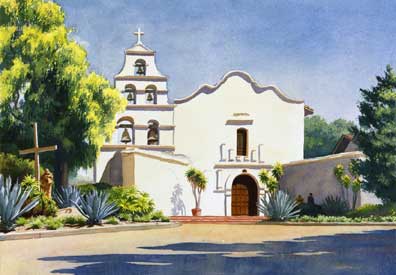 | |||
| Mission basilica of San Diego de Alcala. Source: Wikipedia | |||
| 3 June 1770 | Portola Expedition 1769-1770 - Father Junipero Serra founded the 'Chapel of Mission San Carlos Borromeo de Carmelo' in Monterey. Ohlone and Esselen Indians lived in this area. The Ohlone Indian village of 'Toma' was located near the mission. In the fall of 1771, the mission was moved to its current location in Carmel. In 1777, the chapel was renamed 'Royal Presidio Chapel'. Most of the missions had a square floor plan with an inner courtyard. The missions consisted of a church, accommodation and a cemetery. The missions were self-sufficient. Fruit, grain and corn were grown in the fields. | Ohlone Esselen (Ohlone) | - |
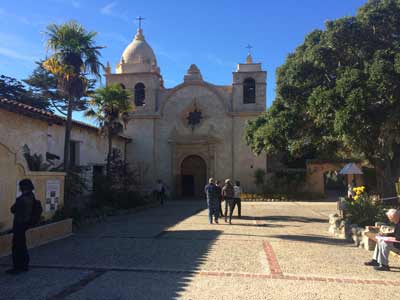 | |||
| Carmel Mission. Source: Daniel Thomet 2014. | |||
| 1770 | Spanish Missions 1769-1823 - Between 1770 and 1797, six missions were built in the Ohlone area between San Francisco Bay and Monterey Bay: San Francisco de Asis (Mission Dolores) in 1776, San Jose in 1797, Santa Clara de Asis in 1777, Santa Cruz in 1791, San Juan Bautista in 1797 and Carmel Mission in 1770. These missions took in Indians from the Ohlone, Miwok, Yokuts, Wintun, Esselen and Salina tribes. The Indians initially came to the missions voluntarily, lured by curiosity, gifts and the hope of profitable trade. Once they arrived at the missions, they were forced by the Franciscans to be baptized. Baptism put an end to the Indians' freedom. From then on, the Indians could be held in the missions against their will, as the Franciscans felt directly responsible to God for the souls of the baptized Indians. Around 1000 Indians were detained in each mission. A small number of soldiers were present to maintain order and arrest these neophytes (newly baptized believers) who tried to escape. Repeated escapees were punished with blows to the body, blows to the soles of the feet or with shackles and imprisonment. These punishments were also intended to set an example for all other Indians. To ensure the chastity of their charges, unmarried young women were housed in separate dormitories or locked up. Most Indians refused to learn the doctrine of the church. The men had to plow the fields, although there was plenty of game, fish, nuts and seeds in the area that only had to be hunted or gathered. The Indians also had to produce soap, tallow and hides (for export to Europe), grow grapes, collect olives, do blacksmithing and make thousands of mud bricks for the construction of the missions. | Ohlone Miwok Yokuts Wintu Esselen (Ohlone) Salinan | - |
| 14 July 1771 | Spanish Missions 1769-1823 - About 55 miles south-east of Monterey, Father Junipero Serra founded the third Spanish mission in California, Mission San Antonio de Padua. It was the first mission whose roofs were covered with red tiles, as was customary in Spain. The red tiles were used again for all subsequent missions. | - | - |
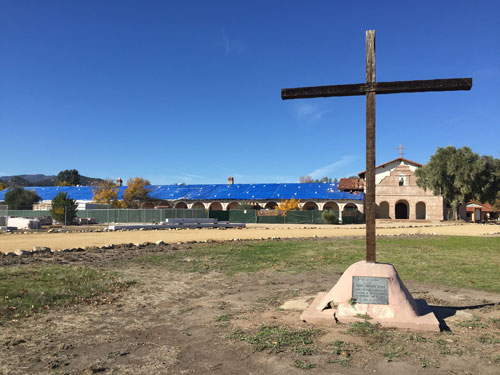 | |||
| Mission San Antonio de Padua. Source: Daniel Thomet, 2015 | |||
| 8 September 1771Nicht erkannter Quellenhinweis | Spanish Missions 1769-1823 - Father Angel Fernandez de la Somera and Pedro Bonito Cambon founded the fourth Spanish mission in California, the San Gabriel Arcangel Mission, in the area that is now the city of Los Angeles. The Gabrielino-Tongva Indians lived in the area between Topanga Canyon and Laguna Beach. | Tongva-Gabrielino | - |
| Autumn 1771 | Spanish Missions 1769-1823 - Father Junipero Serra moved the Carmel Mission from Monterey to its current location in Carmel. Pedro Fages, the military governor of Alta California, behaved like a tyrant, treated his men very badly and abused the Indians' women. Serra wanted to create a greater distance between Fages and the mission through the move. Fages' behavior discouraged the Indians from converting to Christianity. | - | - |
| 1 September 1772 | Spanish Missions 1769-1823 - Father Junipero Serra founded the fifth Spanish mission in California, the Mission San Luis Obispo de Tolosa. San Luis Obispo is located about halfway between San Francisco and San Diego. The Chumash Indians helped to build the mission. | Chumash | - |
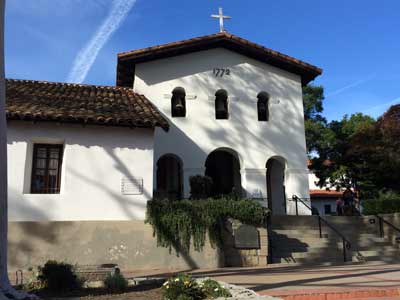 | |||
| Mission San Luis Obispo in Toloso. Source: Daniel Thomet 2014 | |||
| August 1774 | Spanish Missions 1769-1823 - The mission Basilica San Diego de Alcala was moved to its current location, approx. 10 km east of the old site. There was no reliable water supply at the old location. In addition, the old location was too close to a Spanish fort (presidio). The presence of the military near the mission prevented the Indians from being converted to Christianity. The village of Nipaquay (Nipawai) of the Kumeyaay Indians was located near the new mission. | Kumeyaay Kumeyaay | - |
| 4 November 1775 | Spanish Missions 1769-1823 - Whippings and mistreatment of the Kumeyaay Indians at Mission San Diego led to an uprising. Father Luis Jayme was killed by the angry Indians. 600 - 800 Indians took part in the uprising. The mission was looted and burned down. This uprising was the first of a dozen similar Indian uprisings in 'Alta California'. | Kumeyaay | - |
| 29 June 1776 | Spanish Missions 1769-1823 - Lieutenant Jose Joaquin Moraga and Father Francisco Palou founded the Mission San Francisco de Asis (Mission Dolores) in what is now San Francisco. The mission was named after St. Francis of Assisi. It was the sixth Spanish mission in California. In the northern part of the peninsula, where San Francisco is located today, the Yelamu (Ohlone) Indians lived in about six small villages. | Yelamu (Ohlone) | - |
| Middle of August 1776 | Spanish Missions 1769-1823 - About six weeks after the founding of Mission San Francisco de Asis (Mission Dolores), the Yelamu Indians (Ohlone) living in the area were attacked by their neighbors, the Ssalson (Ohlone). The Ssalson not only burned down the village of Sitlintac on Mission Creek, but also two other Yelamu villages. Most of the Yelamu survivors seem to have found refuge with the Huchiun in the east of San Francisco Bay. In the fall of 1776, some Yelamu men returned to the peninsula, ostensibly to hunt ducks. The Yelamu also wanted to find out how friendly the Spanish were towards them. | Yelamu (Ohlone) Ssalson (Ohlone) | - |
| 1 September 1776 | Spanish Missions 1769-1823 - Father Junipero Serra founded the seventh Spanish mission in California, Mission San Juan Capistrano, about halfway between Los Angeles and San Diego. The Acjachemen Indians lived in the area. | Acjachemen | - |
| Middle of December 1776 | Spanish Missions 1769-1823 - Relations between the Spaniards of Mission San Francisco de Asis (Mission Dolores) and the Yelamu Indians (Ohlone) deteriorated after several incidents. The Spaniards arrested a Yelamu Indian. Later, Yelamu Indians tried to free their imprisoned colleague, but failed. Spaniards and Yelamu Indians met at Mission Bay and the Spaniards fired their muskets at Yelamu Indians for the first time. One Yelamu Indian was killed and another seriously injured. The Yelamu surrendered and a Spanish sergeant arrested the suspected Yelamu Indian who had tried to free his captured colleague. | Yelamu (Ohlone) | - |
| 12 January 1777 | Spanish Missions 1769-1823 - The Santa Clara de Asis Mission was the eighth mission to be founded in California, around 70 miles south-east of San Francisco, by the Franciscan monk Tomas de la Pena. Ohlone Indians lived in the surrounding area. The mission was rebuilt six times in different locations due to floods, fires and earthquakes. | Ohlone Ohlone | - |
| 31 March 1782Nicht erkannter Quellenhinweis | Spanish Missions 1769-1823 - Mission San Buenaventura was the ninth mission built by Franciscan monks in what is now California and was founded by Father Junipero Serra in what is now Ventura, about 45 miles northwest of Los Angeles, California. The Chumash Indians lived in this area. The Chumash built aqueducts to carry water from the Ventura River to the mission. | Chumash | - |
| 28 August 1784 | Spanish Missions 1769-1823 - Father Junipero Serra died at the age of 70 in the Carmel Mission. | - | - |
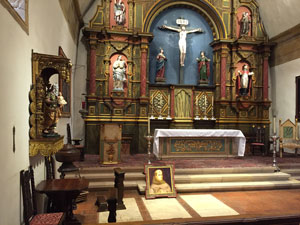 | |||
| Grave of Father Junipero Serra. Source: https://en.wikipedia.org/wiki/Jun?pero_Serra | |||
| 4 December 1786 | Spanish Missions 1769-1823 - Mission Santa Barbara was the tenth mission established by Franciscan monks in California. The mission was founded by Father Fermin Lasuen in what is now Santa Barbara. The Chumash Indians lived in this area. | Chumash | - |
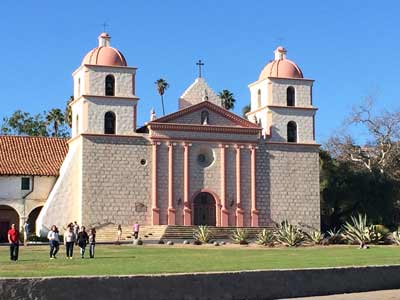 | |||
| Mission Santa Barbara. Source: Daniel Thomet 2014 | |||
| 8 December 1787 | Spanish Missions 1769-1823 - Mission La Purisima Concepcion was the eleventh mission established by Franciscan friars in what is now California (then New Spain). The mission was founded by Father Fermin Lasuen in what is now Lompoc, about 60 miles northwest of Santa Barbara, California. The Chumash Indians lived in this area. The Chumash built aqueducts to carry water from the Ventura River to the mission. The Chumash lived in so-called 'ap (thatched houses), dome-shaped houses whose framework consisted of young, strong logs tied together at the top. The 'ap were covered with rushes or reeds. | Chumash | - |
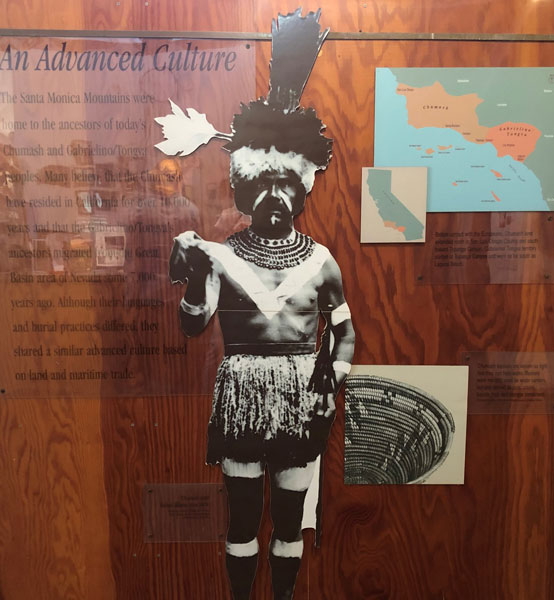 | |||
| Chumash Indians. Source: Satwiva Native American Cultural Center, Thousand Oaks, California | |||
| 1787 | Spanish Missions 1769-1823 - The first Karkins (Ohlone) moved from the Carquinez Strait, about 25 miles northeast of San Francisco, to Mission Dolores near present-day San Francisco. | Karkin (Ohlone) | - |
| 28 August 1791 | Spanish Missions 1769-1823 - The Santa Cruz Mission on the northern edge of Monterey Bay was founded by Father Fermin Lasuen. Due to flooding of the San Lorenzo River, the mission was rebuilt on a nearby hill in the following two years. First the Awaswas (Ohlone Indians, also known as Costanoan) living in the nearby Santa Cruz Mountains were converted to Christianity, and later also the Yokuts living further east. | Awaswas (Ohlone) Ohlone Yokuts | - |
| 9 October 1791 | Spanish Missions 1769-1823 - Father Fermin Lasuen founded the thirteenth Spanish mission in California, the Mission de Maria Santisima Nuestra Senora de la Soledad. Soledad is located about 50 miles southeast of Monterey or Carmel. The mission was flooded in 1824, 1828 and 1832 and then abandoned. Only a few Indians lived in the vicinity of the mission. Indians had to be recruited from more distant tribes such as the Chalon, Esselen, Yokuts and Salinan. | Chalon Esselen (Ohlone) Yokuts Salinan | - |
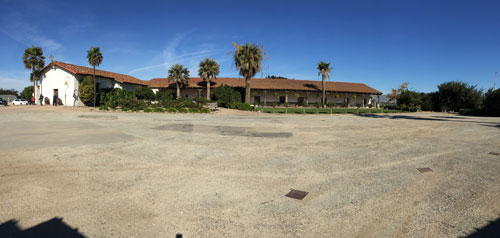 | |||
| Mission Soledad. Source: Daniel Thomet 2014 | |||
| 11 June 1797 | Spanish Missions 1769-1823 - Mission in California was founded by the Franciscan monk Fermin Lasuen. The mission is located about 12 miles north of San Jose on the eastern edge of the town of Fremont. Ohlone Indians lived in the surrounding area. | Ohlone Ohlone | - |
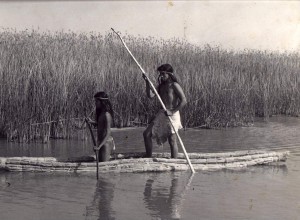 | |||
| Ohlone Indians in California. Source: http://www.sanjosehistory.org/pre-history/ | |||
| 24 June 1797 | Spanish Missions 1769-1823 - The 15th mission in California, Mission San Juan Bautista was founded by the Franciscan monk Fermin Lasuen about 40 miles north-east of Mission Carmel. Initially, the Rumsien (Ohlone) Indians living in the area were converted to Christianity, later also the Yokuts living in the Central Valley. | Rumsen (Ohlone) Yokuts | - |
| 25 July 1797 | Spanish Missions 1769-1823 - As the 16th Spanish mission, the San Miguel Mission was founded by Father Fermin Lasuen near the present-day town of San Miguel. The Salian Indians lived in this area. | Salinan | - |
| 8 September 1797 | Spanish Missions 1769-1823 - Father Fermin Lasuen founded Mission San Fernando near the present-day village of Mission Hills on the north-western outskirts of Los Angeles in California. Mission San Fernando was the 17th mission founded by Franciscan monks in California. On the site of the new mission in the northern San Fernando Valley was one of the numerous Tataviam villages called 'Achoicominga'. | Tataviam | - |
| 13 June 1798 | Spanish Missions 1769-1823 - The 18th Spanish mission, Mission San Luis Rey, was founded by Father Fermin Lasuen near the present-day town of Oceanside in California. Oceanside is located on the Pacific coast roughly halfway between Los Angeles and San Diego. | - | - |
| End of 1800 | Spanish Missions 1769-1823 - The Mission San Francisco de Asis was home to 644 Indians, 70% of whom were 450 Ohlone Indians. | Ohlone | - |
| 14 September 1804 | Spanish Missions 1769-1823 - As the 19th Spanish mission, the Santa Ines Mission was founded by Father Estevan Tapis near the present-day town of Solvang. The Chumash Indians lived in this area. It was the fifth and last mission to be established in the territory of the Chumash Indians. | Chumash | - |
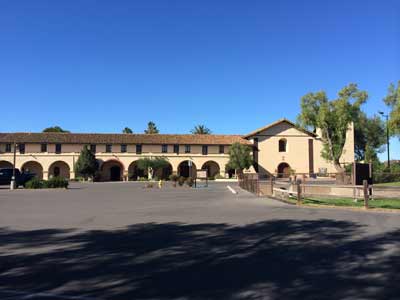 | |||
| Mission Santa Ines. Source: Daniel Thomet 2014 | |||
| 14 September 1804 | Spanish Missions 1769-1823 - About a quarter of the mission Indians in the San Francisco Bay Area died during a measles epidemic. At the San Francisco de Asis (Dolores) mission, 300 Indians died. | Ohlone Miwok Yokuts Wintu Esselen (Ohlone) Salinan | - |
| 16 September 1810 | Spanish Missions 1769-1823 - Spain was weakened by the Napoleonic Wars on the Iberian Peninsula. The New Spaniards took advantage of this to declare their independence from Spain. A long war of independence followed, which only ended with independence on September 27, 1821. | - | - |
| End of 1810 | Spanish Missions 1769-1823 - Since New Spain's declaration of independence from the Spanish on September 16, 1810, the supply ships from Mexico to California failed to arrive and the Spanish soldiers and officials in the Spanish missions in California were no longer paid. As a result, the missions no longer received money for the agricultural produce they produced, which was needed by the soldiers. The mission Indians were also no longer paid for their work for the soldiers. | - | - |
| About 1810 | Spanish Missions 1769-1823 - The last Karkins (Ohlone) moved from the Carquinez Strait, about 25 miles northeast of San Francisco, to Mission Dolores near present-day San Francisco. | Karkin (Ohlone) | - |
| Bis 1810 | Spanish Missions 1769-1823 - Until 1810, the death rate of the Indians living in the Spanish missions was higher than the birth rate in almost all missions. Most Indians died from imported European diseases. The missions practiced agriculture on a large scale. However, as Indians kept dying, the missions were forced to search for Indians in ever larger areas to replace the dying Indians. The search extended as far as the Central Valley and the foothills of the Sierra Nevada. . After the outbreak of the Mexican War of Independence in 1810, the missions in California were no longer supplied with goods from Mexico. The Spanish soldiers and authorities were no longer paid by Spain. Nevertheless, food was still expected from the missions. The situation did not improve until 1820. | - | - |
| 8 December 1812 | Spanish Missions 1769-1823 - An earthquake measuring 7 on the Richter scale occurred in southern California. Many of the Spanish missions in California were severely damaged. At Mission San Gabriel, the church tower and bells were damaged. At Mission San Juan Capistrano, 40 Indians died during mass. | - | - |
| 1817 | Spanish Missions 1769-1823 - Mission San Francisco de Asis was home to 1048 Indians, of whom only 22% were Ohlone, including Karkin-Ohlone. The reason for this was that other tribes from the east and north of San Francisco Bay came to the mission, such as the Bay Miwok, Coast Miwok Patwin (Wintun) and Wappo. | Ohlone Bay Miwok (Miwok) Coastal Miwok (Miwok) Patwin (Wintun) Wappo | - |
| 14 December 1817 Nicht erkannter Quellenhinweis | Spanish Missions 1769-1823 - The penultimate Spanish mission, Mission San Rafael Arcangel, was founded by Father Francisco de Sarria near the present-day village of San Rafael. Miwok and Pomo Indians lived in the area. | Coast Miwok (Miwok) Pomo | - |
| End of 1817 | Spanish Missions 1769-1823 - There were still 47 Karkin (Ohlone) living in Mission Dolores in what is now San Francisco. | Karkin (Ohlone) | - |
| 1819 | Spanish Missions 1769-1823 - The estancia of the San Gabriel Arc?ngel mission was founded in 1819. A second estancia was founded and built around 1830 on the Rancheria Politana, about 1.6 km from the original 1819 site. The Politana site of the Estancia San Bernardino de Sena is now a historical landmark in California. The land of the California missions was secularized in 1833-34. | - | - |
| 24 August 1821 | Spanish Missions 1769-1823 - Treaty of Cordoba 1821In the Treaty of Cordoba, New Spain (Mexico and today's south-western states of the USA) gained independence from Spain. After around 300 years of colonial rule, the Spanish left the new owners with many problems. The border with Texas and New Mexico was anything but tight, allowing the Comanche to raid into Mexico and the northern provinces (New Mexico and Texas) almost at will. The main victims of the Comanche in the 19th century were the Mexicans, with thousands of dead soldiers and ranchers south of the Rio Grande. The new masters were unable to collect taxes and customs duties in the north, and the government in the capital no longer had any authority outside. The expenses for the army of 80,000 soldiers built up during the revolutionary period exceeded state revenues. Furthermore, the army was not deployed to secure the border, but against their own countrymen. For the Comanches, this meant that they could move around unhindered. Their raids and looting, with the associated brutality, rapes and the theft of hundreds of children, reached their peak. This led to increased settlement movements from New Spain to the north. This also affected the Utes. Gifts to the Indians also declined abruptly. The old friendship between the Indians and the Spanish broke down. Sporadic fights between the parties became more frequent. In order to revive trade, the Mexicans intensified trade via the Santa Fe route. | Comanche Ute | - |
| 4 July 1823 | Spanish Missions 1769-1823 - The last Spanish mission was Mission San Francisco Solano, founded by Father José Altimira near the present-day town of Sonoma. The Wappo, Patwin, Pomo and Lake Miwok Indians lived in this area. | Wappo Patwin (Wintun) Pomo Lake Miwok (Miwok) | - |
| 1823 | Spanish Missions 1769-1823 - In the 54 years of the existence of the Spanish missions in California (1769-1823), 21 missions were established in which 142 Franciscan monks worked and 53,600 Indians were converted to the Christian faith. | - | - |
| End of 1823 | Spanish Missions 1769-1823 - Another 35 Karkin (Ohlone) lived in Mission Dolores, Mission San Francisco Solano and Mission San Jose, California. | Karkin (Ohlone) | - |
| 1827 | Spanish Missions 1769-1823 - The missionary Indian Estanislao left the San José mission. Over time, he gathered around him some 400 Indians who had also fled. He fought against the Spaniards for about a year until his village was attacked in 1829. The Indians attacked the missions of San Jose, Santa Clara and Santa Cruz as well as the Mexicans on the Stanislaus River. | Ohlone | Estanislao |
| 1828 | Spanish Missions 1769-1823 - In 1828, the Mission San Antonio de Padua had more than 20,000 animals, including 8,000 cattle and 10,000 sheep. | - | - |
| Spring 1829 | Spanish Missions 1769-1823 - Spanish soldiers raided Estanislao's camp. Estanislao was taken prisoner and returned to Mission San José. | Ohlone | Estanislao |
| 1833 | Spanish Missions 1769-1823 - Secularization Act 183312 years after the end of the Mexican War of Independence, the Mexican government passed the 'Secularization Law'. The reason for this was that most of the Spanish missions remained loyal to the Roman Catholic Church in Spain. Mexico wanted to end the influence of the Spanish in California. The 'secularization' also aimed to divide up the land of the missions among the indigenous population. The law meant that the former Spanish missions lost most of their land and buildings. This property was sold to rich whites. Likewise, Spanish priests under the age of 70 had to leave California, as most of them remained loyal to Spain. The aim of the missions was to integrate the Indians into Spanish society. Instead, the Indians lost their own land and most of their possessions as a result of the law. | Salinan | - |
| 1834Nicht erkannter Quellenhinweis | Spanish Missions 1769-1823 - The San Gabriel Arcangel Mission was secularized. By this time, 25,000 people had been converted to the Christian faith at the mission, more than at any other Spanish mission in California. | - | - |
| About 1840 | Spanish Missions 1769-1823 - All Esselen Indians fled from the Spanish missions into the nearby mountains. In the 1840s, the Esselen sought refuge in the growing towns, farms and ranches. | Esselen (Ohlone) | - |
| 1843 | Spanish Missions 1769-1823 - Only 8 old Indians were still living in the Mission San Francisco de Asis. | Ohlone | - |
| 2 February 1848 | Spanish Missions 1769-1823 - Treaty of Guadalupe Hidalgo 1848In the Treaty of Guadalupe Hidalgo, the Mexicans had to cede the territory from the Sabena River to the Pacific coast to the Americans. This ended the Mexican-American War of 1846-1848. The Americans were obliged to stop Indian raids into Mexico from the territories of New Mexico and Texas. The territory of California, Arizona, Utah, Nevada, southwest Wyoming, western Colorado and western New Mexico thus became their property, and the Indians in these areas were suddenly subjected to a new rule. Even before the treaty was signed, the Americans encouraged their compatriots to settle in the San Juan Valley in southern Colorado. The Utes living there intensified their attacks on the settlers. The 21 Spanish missions in what is now California thus became American property. | Ute | - |
| 2 February 1848 | Spanish Missions 1769-1823 - After the territory of the future state of California became part of the United States in 1848, a land commission was set up to regulate land rights. As a result, the missions and some of the land were returned to the Church. The process was slow and lasted through the presidencies of Buchanan, Lincoln and Grant until around 1884. | - | - |
| 7 September 1850 | Spanish Missions 1769-1823 - California became the 31st state of the United States. The first governor of California, Peter Burnett, openly advocated the extermination of the Indians in California. | - | - |
| 1850 | Spanish Missions 1769-1823 - Around 93,000 whites were already living in California. Two years earlier, before the outbreak of the Gold Rush, only around 800 whites lived in California. | - | - |
| 9 January 1857 | Spanish Missions 1769-1823 - The 'Fort Tejon earthquake' occurred in central California with a magnitude of 8 on the Richter scale. At Mission San Buenaventura, the roof collapsed and the church tower was damaged. The church at Mission Santa Cruz collapsed. The San Gabriel mission had to be closed and restored. | - | - |
| Etwa 1865 | Spanish Missions 1769-1823 - The surviving Indians of the San Francisco Bay Area, including the Plain Miwok, Ohlone, North Valley Yokuts, Patwin (Wintun) and Coast Miwok, gathered in ghetto-like villages, such as Verona Station, between the present-day cities of Sunol and Pleasanton, California. Other similar villages developed in Monterey Bay, San Juan Bautista and probably other places. | Ohlone Plains Miwok (Miwok) North Valley Yokuts (Yokuts) Patwin (Wintun) Coast Miwok (Miwok) | - |
| 18 March 1865 | Spanish Missions 1769-1823 - US President Abraham Lincoln signed a proclamation returning parts of the former Spanish missions to the Catholic Church. 1.05 million acres of land were returned. At this point, most of the missions were in ruins. The rebuilding of the missions began slowly, as the church lacked the money to rebuild all the missions at the same time. | - | - |
| 1884 | Spanish Missions 1769-1823 - The author Helen Hunt Jackson wrote about her experiences as an agent for the Department of the Interior in her book 'Ramona'. In this capacity, she visited the missions in California and documented the situation of the Indians. In 1883, in a 56-page report, she recommended buying land for the Indians and opening more schools for them. The US Senate agreed with her recommendations, but the House of Representatives rejected them. To reach a wider public, Jackson published the book in 1884. After its publication, public interest in the situation of the Indians and the missions in California grew. | - | - |
| 12 August 1885 | Spanish Missions 1769-1823 - The American writer Helen Hunt Jackson died of stomach cancer in San Francisco. With her book 'Ramona', published in 1884, Hunt contributed to making the general public aware of the situation of the Indians and the missions in California. | - | - |
| 1955 | Spanish Missions 1769-1823 - The last of the Spanish missions was rebuilt. Two missions have become California State Historical Parks. Today, the Spanish missions are living witnesses to California's past. | - | - |
| |||
| Mission Santa Barbara. Source: Thomet Daniel 2014 | |||