


|
| Buchcover | Autor | Titel | Beschreibung |
| Bild | Autor | Leer | Beschreibung |
| Datum | Ereignis | Stamm | Häuptling |
10900 v. Chr  | Auf der kalifornischen Insel Santa Rosa haben Archäologen die ältesten menschlichen Überreste Nordamerikas gefunden. Der Fundort trägt den Namen 'Arlington Springs Man'. Vor der Ankunft der Europäer lebten in Kalifornien zwischen 100'000 und 250'000 Indianer in 21 Nationen: Südkalifornien: Yuman, Shoshone, Chumash Zentralkalifornien: Salinan, Yokuts, Esselen, Costanoan, Miwok, Washo Nordkalifornien: Pomo, Maidu, Wintun, Yuki, Yana, Athabascan, Wiyout, Chimariko, Shastan, Lutuami, Karok und Yurok. Jede dieser Nationen setzte sich aus verschiedenen Stämmen zusammen. Zu den Yana gehörten beispielsweise die Nördlichen Yana, die Zentralen Yana, die Südlichen Yana und die Yahi.   | Yuman Shoshone Chumash Salinan Yokuts Esselen (Ohlone) Costanoan Miwok Washoe Pomo Maidu Wintu Yuki Yana Athabascan Wiyot Chimariko Shastan (Rogue River) Lutuami Karok Yurok | - |
| 10000 v. Chr. | Auf den Channel Islands bei Santa Barbara in Kalifornien lebten bereits die Vorfahren der späteren Chumash-Indianer. . | Chumash | - |
| 2500 v. Chr. | Auf einem Hügel gegenüber dem heutigen Malibu Lagoon State Beach begannen die Chumash Indianer in einem Dorf zu leben. Die Chumash nannten dieses Dorf 'Humaliwo' ('where the surf sounds loud'). Humaliwo war die zweitgrößte Chumash-Siedlung entlang der Küste am Fuße der Santa Monica Mountains. | Chumash | - |
| 1000 v. Chr. | Um 1000 v. Chr. begannen die Chumash-Indianer im Dorf Huwam im Bell Canyon zu siedeln, etwa 9 Meilen nordöstlich von Thousand Oaks in Kalifornien. | Chumash | - |
| 1000 v. Chr. | Um 1000 v. Chr. begannen die Chumash-Indianer im Dorf Lalimanux in der Region Conejo Grade / Camarillo Grade zu siedeln, etwa 7 Meilen nordwestlich von Thousand Oaks in Kalifornien. | Chumash | - |
| 1000 v. Chr. | Um 1000 v. Chr. begannen die Chumash-Indianer am Calleguas Creek südöstlich von Simi im Dorf Kay'iwish in Kalifornien zu leben. | Chumash | - |
| 1000 v. Chr. | Um 1000 v. Chr. begannen die Chumash-Indianer am Calleguas Creek südöstlich von Simi im Dorf Kay'iwish, Kalifornien, zu siedeln. | Chumash | - |
| 1000 v. Chr. | Um 1000 v. Chr. begannen die Chumash-Indianer am Arroyo Sequi westlich von Point Dume im Dorf Lalimanuh in Kalifornien zu siedeln. | Chumash | - |
| 1000 v. Chr. | Um 1000 v. Chr. begannen die Chumash-Indianer am Arroyo Sequi westlich von Point Dume im Dorf Lisiqishi in Kalifornien zu siedeln. | Chumash | - |
| 1000 v. Chr. | Um 1000 v. Chr. begannen die Chumash-Indianer im Trancas Canyon westlich von Point Dume im Dorf Lohostohni, Kalifornien, zu siedeln. | Chumash | - |
| 1000 v. Chr. | Um 1000 v. Chr. begannen die Chumash-Indianer am Santa Clara River in der Nähe des heutigen Dorfes Saticoy in Sa'aqtik'oy, Kalifornien, zu siedeln. | Chumash | - |
| 1000 v. Chr. | Um 1000 v. Chr. begannen die Chumash-Indianer am Potreto Valley Creek östlich des Las Virgenes Reservoirs im Dorf S'ap tuhuy, Kalifornien, zu siedeln. | Chumash | - |
| 1000 v. Chr. | Um 1000 v. Chr. begannen Chumash-Indianer im Dorf Sapwi im Gebiet der Rancho Guadalascaz nördlich von Point Mugu, Kalifornien, zu leben. | Chumash | - |
| 1000 v. Chr. | Um 1000 v. Chr. begannen Chumash-Indianer im Dorf Satwiwa im Gebiet der Rancho Guadalascaz nördlich von Point Mugu, Kalifornien, zu leben. | Chumash | - |
| 1000 v. Chr. | Um 1000 v. Chr. begannen die Chumash-Indianer im Dorf Alqilko'wi im Gebiet des Little Sycamore Canyon in Kalifornien zu leben. | Chumash | - |
| 1000 v. Chr. | Um 1000 v. Chr. begannen die Chumash-Indianer im Dorf Shuwalahsho im Gebiet des Liberty Canyon / Las Virgenes Creek in den Santa Monica Mountains, Kalifornien, zu leben. | Chumash | - |
| 1000 v. Chr. | Um 1000 v. Chr. siedelten die Chumash-Indianer im Dorf Kats'ikinhin am Las Virgenes Creek oberhalb von Malibu, Kalifornien. | Chumash | - |
| 1000 v. Chr. | Um 1000 v. Chr. begannen die Chumash-Indianer im Dorf Ta'lopop (Talopop) im Gebiet des Liberty Canyon / Las Virgenes Creek in den Santa Monica Mountains, Kalifornien, zu leben. | Chumash | - |
| 1000 v. Chr. | Um 1000 v. Chr. begannen die Chumash-Indianer im Dorf 'Muwu' am Calleguas Creek in der Nähe von Point Mugu zu siedeln. Muwu war das größte Dorf der Chumash. | Chumash | - |
| 500 v. Chr. | Um 1000 v. Chr. begannen die Chumash-Indianer im Dorf Hipuk in der Gegend von Westlake Village bei Thousand Oaks in Kalifornien zu leben. | Chumash | - |
| 900 n. Chr. | Die Chumash-Indianer malten Piktogramme auf die Felswände der Höhle, die heute als Burro Flats Painted Cave (BFPC) bekannt ist. Sie liegt bei Burro Flats in den Simi Hills im östlichen Ventura County, Kalifornien. | Chumash | - |
| 8. Oktober 1542 | Juan Cabrillo Expedition 1542-1543 - Cabrillo landete in der heutigen San Pedro Bay in der Nähe von Long Beach, im Süden von Los Angeles. Cabrillo nannte den Ort 'Bay of Smokes' wegen des vielen Rauchs, der von den absichtlichen Bränden der Indianer herrührte. Die kalifornischen Indianer brannten Wiesen und Wälder absichtlich nieder, um das Wachstum von Pflanzen, Samen, Wurzeln und Früchten für das nächste Jahr zu sichern. | Chumash | - |
| 15. Oktober 1542 | Juan Cabrillo Expedition 1542-1543 - Zuerst segelt Cabrillo etwa 'ten leaggues' der Küste entlang und anschliessend zu Santa Cruz Island. Entlang der Küste beobachtete Cabrillo sehr viele Chumash in ihren Tomols (Kanus der Chumash). Die Spanier nannten Santa Cruz Island 'San Luca'. | Chumash | - |
| 18. Oktober 1542 | Juan Cabrillo Expedition 1542-1543 - Cabrillo erreichte Point Galera, das heutige Point Conception. Die gesamte Küste zwischen Malibu und Point Conception war gemäss dem Tagebuch von Juan Paez dicht besiedelt mit Chumash-Indianern. Und die Spanier bemerkten auch, dass die Chumash viele verschiedene Dialekte sprachen. | Chumash | - |
| 25. Oktober 1542 | Juan Cabrillo Expedition 1542-1543 - Cabrillo verliess die Insel San Miguel Island und segelte Richtung Norden | Chumash | - |
| 3. Januar 1543 | Juan Cabrillo Expedition 1542-1543 - Cabrillos Männer wurden auf der Insel Santa Catalina wiederholt von Chumash-Kriegern angegriffen. Die Chumash, die auf den Inseln lebten, waren ärmer und aggressiver als die Chumash auf dem Festland. Bei einem dieser Überfälle versuchte Cabrillo seinen Männern zu helfen und zertrümmerte sich dabei sein Schienbein. Die Wunde entzündete sich. Cabrillo starb am 3. Januar 1543 und Bartolome Ferrer übernahm das Kommando über die Expedition und die drei Schiffe. | Chumash | - |
| Um 1600 | Die Chumash Indianer begannen in einer Höhle Felsmalereien anzufertigen. Heute zählen diese Felsmalereien zu den schönsten in den USA. Die Stätte ist heute als Chumash Painted Cave State Historic Park bekannt. | Chumash | - |
| 1700 | In Kalifornien lebten etwa 10'000 Chumash-Indianer. Die Chumash-Indianer tauschten Eicheln, Chiasamen, Pinienkerne, Dogbane (eine Pflanze), Kleidung, Körbe, Waffen, Schmuck und andere Gegenstände mit den umliegenden Stämmen. | Chumash | - |
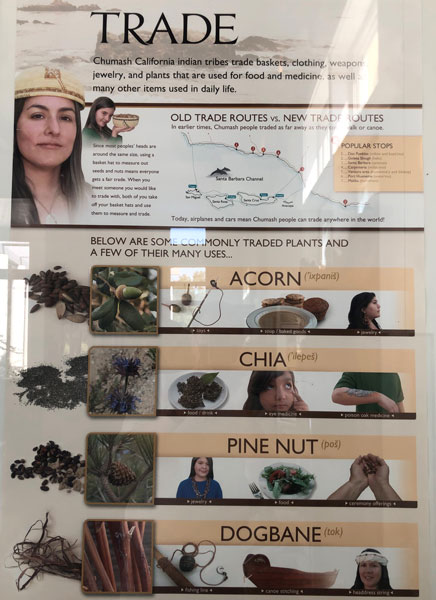 | |||
| Handelswaren der Chumash-Indianer. Quelle: Chumash Indian Museum, Thousand Oaks, Kalifornien. | |||
| 1700 | Etwa 10'000 Chumash-Indianer lebten in Kalifornien. | Chumash | - |
| 1768 | Vor der Zeit der spanischen Missionen lebten die Chumash in Kalifornien in 150 unabhängigen Dörfern von den Santa Ynez Mountains entlang der Küste bis nach Malibu. Die Gesamtzahl der Chumash wird auf 22'000 geschätzt. | Chumash | - |
| 17. August 1769 | Portola Expedition 1769-1770 - Die Gruppe unter Portola erreichte das heutige Santa Barbara. Zu dieser Zeit lebten die Chumash-Indianer an der Mündung des San Roque Creek in den Arryo Burro Creek, etwa 1,75 Meilen westlich der späteren Mission Santa Barbara. Die Expedition kampierte in der Nähe der 'Laguna', einem kleinen See an der Kreuzung der heutigen Ortega Street und Laguna Street in Santa Barbara. Die Sommerunterkunft, die gewölbte Schilfhütte, war oberirdisch gebaut (im Gegensatz zum Pit-Haus, das teilweise in den Boden eingelassen war). Die Schilfhütte bestand aus einem kuppelförmigen oder kegelförmigen Gerüst aus biegsamen Zweigen, das mit Matten aus starkem, haltbarem Tule-Schilf (Binsen) bedeckt war. Die Chumash nannten diese Hütten 'ap. | Chumash | - |
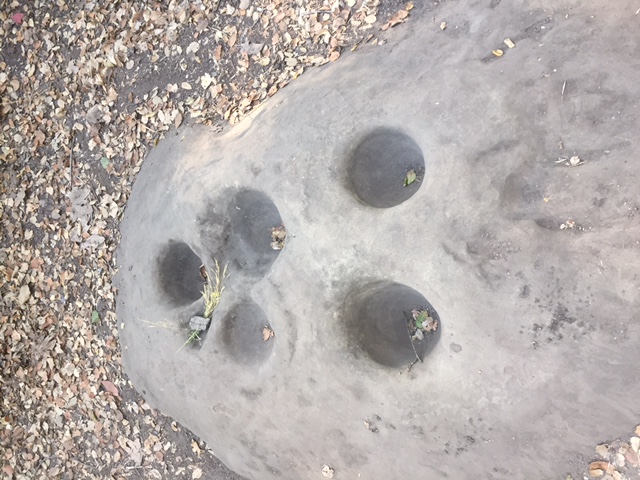 | |||
| In einen Felsbrocken eingelassener Mörser der Chumash-Indianer am Roque Canyon Creek, Santa Barbara, Kalifornien. Quelle: Jennifer Osborne, 2017 (Vielen Dank!) | |||
| 18. Oktober 1769 | Portola Expedition 1769-1770 - Die Gruppe unter Portola erreichte die Insel Santa Cruz am 18. Oktober. Pater Francisco Palóu schrieb, dass die Chumash im Dorf Xaxas die Besucher 'mit großer Freude' begrüßten, Fisch anboten und beim Wasserholen halfen. In Xaxas lebten zwischen 100 und 160 Chumash. Die Sommerunterkunft, die gewölbte Schilfhütte, war oberirdisch gebaut (im Gegensatz zum Grubenhaus, das teilweise in den Boden eingelassen war). Die Schilfhütte bestand aus einem kuppelförmigen oder kegelförmigen Gerüst aus biegsamen Ästen, das mit Matten aus starkem, haltbarem Tule-Schilf (Binsen) bedeckt war. Die Chumash nannten diese Hütten 'ap. | Chumash | - |
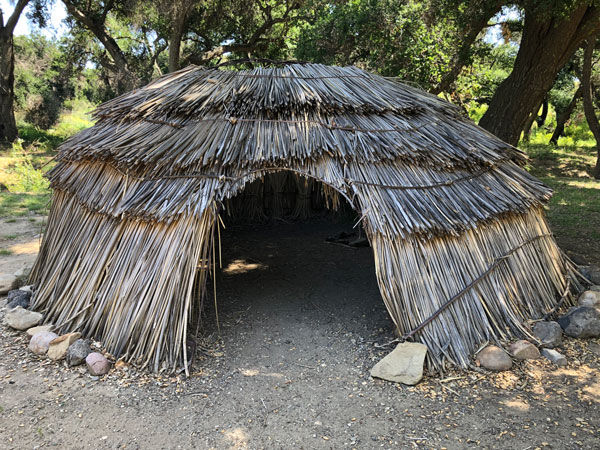 | |||
| Behausung der Chumash Indianer. Quelle: Chumash Indian Museum, Thousand Oaks, Kalifornien. | |||
| 18. Oktober 1769 | Portola Expedition 1769-1770 - Die Gruppe unter Portola erreichte die Insel Santa Cruz am 18. Oktober. Pater Francisco Palóu schrieb, dass die Chumash im Dorf Xaxas die Besucher 'mit großer Freude' begrüßten, Fisch anboten und beim Wasserholen halfen. In Xaxas lebten zwischen 100 und 160 Chumash. | Chumash | - |
 | |||
| Die Gruppe unter Portola erreichte die Insel Santa Cruz am 18. Oktober. Pater Francisco Palóu schrieb, dass die Chumash im Dorf Xaxas die Besucher 'mit großer Freude' begrüßten, Fisch anboten und beim Wasserholen halfen. In Xaxas lebten zwischen 100 und 160 Chumash. | |||
| 1. September 1772 | Spanische Missionen 1769-1823 - Pater Junipero Serra gründete die fünfte spanische Mission in Kalifornien, die Mission San Luis Obispo de Tolosa. San Luis Obispo liegt etwa auf halbem Weg zwischen San Francisco und San Diego. Die Chumash-Indianer halfen beim Bau der Mission. | Chumash | - |
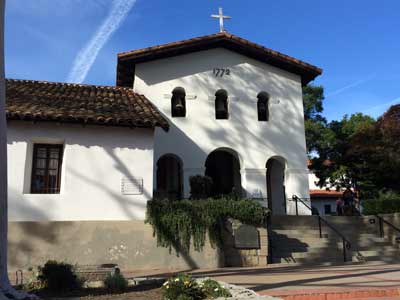 | |||
| Mission San Luis Obispo in Toloso. Quelle: Daniel Thomet 2014 | |||
| 1772 | Als die fünfte spanische Mission in Kalifornien, die Mission San Luis Obispo de Tolosa, gebaut wurde, lebten die Chumash in der Nähe von San Luis Obispo, Santa Barbara, Ventura, Los Angeles, Santa Cruz Island, Santa Rosa Island und San Miguel Island. Die Chumash lebten in ungefähr 150 Dörfern. Auf den Channel Islands konnten bisher elf Dörfer auf Santa Cruz Island, acht Dörfer auf Santa Rosa Island und zwei Dörfer auf San Miguel Island archäologisch nachgewiesen werden. | Chumash | - |
 | |||
| Chumash-Indianer fischen mit Tomol-Booten nach Thunfisch. Quelle: Chumash Indian Museum, Thousand Oaks, Kalifornien | |||
| 1772 | Als die fünfte spanische Mission in Kalifornien, die Mission San Luis Obispo de Tolosa, gebaut wurde, lebten die Chumash in der Nähe von San Luis Obispo, Santa Barbara, Ventura, Los Angeles, Santa Cruz Island, Santa Rosa Island und San Miguel Island. Die Chumash lebten in ungefähr 150 Dörfern. Auf den Channel Islands konnten bisher elf Dörfer auf Santa Cruz Island, acht Dörfer auf Santa Rosa Island und zwei Dörfer auf San Miguel Island archäologisch nachgewiesen werden. | Chumash | - |
| 1772 | Zur Zeit des Baus der fünften spanischen Mission in Kalifornien, der Mission San Luis Obispo de Tolosa, lebten die Chumash in der Nähe von San Luis Obispo, Santa Barbara, Ventura, Los Angeles, Santa Cruz Island, Santa Rosa Island und San Miguel Island. Die Chumash lebten in ungefähr 150 Dörfern. Auf den Channel Islands konnten bisher elf Dörfer auf Santa Cruz Island, acht Dörfer auf Santa Rosa Island und zwei Dörfer auf San Miguel Island archäologisch nachgewiesen werden. | Chumash | - |
| 1772 | Als die fünfte spanische Mission in Kalifornien, die Mission San Luis Obispo de Tolosa, gebaut wurde, lebten die Chumash in der Nähe von San Luis Obispo, Santa Barbara, Ventura, Los Angeles, Santa Cruz Island, Santa Rosa Island und San Miguel Island. Die Chumash lebten in ungefähr 150 Dörfern. Auf den Channel Islands konnten bisher elf Dörfer auf Santa Cruz Island, acht Dörfer auf Santa Rosa Island und zwei Dörfer auf San Miguel Island archäologisch nachgewiesen werden. | Chumash | - |
1772  | Zur Zeit des Baus der fünften spanischen Mission in Kalifornien, der Mission San Luis Obispo de Tolosa, lebten die Chumash in der Nähe von San Luis Obispo, Santa Barbara, Ventura, Los Angeles, Santa Cruz Island, Santa Rosa Island und San Miguel Island. Die Chumash lebten in ungefähr 150 Dörfern. Auf den Channel Islands auf Santa Cruz Island konnten bisher elf Dörfer, auf Santa Rosa Island acht Dörfer und auf San Miguel Island zwei Dörfer archäologisch nachgewiesen werden. In der Nähe von Bay Point auf San Miguel Island lebten die Chumash im Dorf 'Tuqan'. | Chumash | - |
| 1772 | Als die fünfte spanische Mission in Kalifornien, die Mission San Luis Obispo de Tolosa, gebaut wurde, lebten die Chumash in der Nähe von San Luis Obispo, Santa Barbara, Ventura, Los Angeles, Santa Cruz Island, Santa Rosa Island und San Miguel Island. Die Chumash lebten in ungefähr 150 Dörfern. Auf den Channel Islands auf Santa Cruz Island konnten bisher elf Dörfer, auf Santa Rosa Island acht Dörfer und auf San Miguel Island zwei Dörfer archäologisch nachgewiesen werden. In Becher's Bay auf Santa Rosa Island lebten etwa 75 Chumash im Dorf 'Hichimin'. | Chumash | - |
| 1772 | Zur Zeit des Baus der fünften spanischen Mission in Kalifornien, der Mission San Luis Obispo de Tolosa, lebten die Chumash in der Nähe von San Luis Obispo, Santa Barbara, Ventura, Los Angeles, Santa Cruz Island, Santa Rosa Island und San Miguel Island. Die Chumash lebten in ungefähr 150 Dörfern. Auf den Channel Islands auf Santa Cruz Island konnten bisher elf Dörfer, auf Santa Rosa Island acht Dörfer und auf San Miguel Island zwei Dörfer archäologisch nachgewiesen werden. Im Osten von Santa Rosa Island lebten die Chumash im Dorf 'Qshiwqshiw'. | Chumash | - |
| 1772 | Als die fünfte spanische Mission in Kalifornien, die Mission San Luis Obispo de Tolosa, gebaut wurde, lebten die Chumash in der Nähe von San Luis Obispo, Santa Barbara, Ventura, Los Angeles, Santa Cruz Island, Santa Rosa Island und San Miguel Island. Die Chumash lebten in ungefähr 150 Dörfern. Auf den Channel Islands auf Santa Cruz Island konnten bisher elf Dörfer, auf Santa Rosa Island acht Dörfer und auf San Miguel Island zwei Dörfer archäologisch nachgewiesen werden. Im Osten von Santa Rosa Island lebten die Chumash im Dorf 'Helewashkuy'. | Chumash | - |
| 1772 | Zur Zeit des Baus der fünften spanischen Mission in Kalifornien, der Mission San Luis Obispo de Tolosa, lebten die Chumash in der Nähe von San Luis Obispo, Santa Barbara, Ventura, Los Angeles, Santa Cruz Island, Santa Rosa Island und San Miguel Island. Die Chumash lebten in ungefähr 150 Dörfern. Auf den Channel Islands auf Santa Cruz Island konnten bisher elf Dörfer, auf Santa Rosa Island acht Dörfer und auf San Miguel Island zwei Dörfer archäologisch nachgewiesen werden. Etwa eine Meile östlich von Furney Cove auf Santa Cruz Island lebten die Chumash im Dorf 'L'akayamu'. | Chumash | - |
| 1772 | Als die fünfte spanische Mission in Kalifornien, die Mission San Luis Obispo de Tolosa, gebaut wurde, lebten die Chumash in der Nähe von San Luis Obispo, Santa Barbara, Ventura, Los Angeles, Santa Cruz Island, Santa Rosa Island und San Miguel Island. Die Chumash lebten in ungefähr 150 Dörfern. Auf den Channel Islands auf Santa Cruz Island konnten bisher elf Dörfer, auf Santa Rosa Island acht Dörfer und auf San Miguel Island zwei Dörfer archäologisch nachgewiesen werden. In der Gegend von Christi Beach auf Santa Cruz Island lebten Chumash-Indianer im Dorf 'Ch'oloshush'. | Chumash | - |
| 1772 | Zur Zeit des Baus der fünften spanischen Mission in Kalifornien, der Mission San Luis Obispo de Tolosa, lebten die Chumash in der Nähe von San Luis Obispo, Santa Barbara, Ventura, Los Angeles, Santa Cruz Island, Santa Rosa Island und San Miguel Island. Die Chumash lebten in ungefähr 150 Dörfern. Auf den Channel Islands konnten bisher elf Dörfer auf Santa Cruz Island, acht Dörfer auf Santa Rosa Island und zwei Dörfer auf San Miguel Island archäologisch nachgewiesen werden. In der Nähe von Scorpion Anchorage im Nordosten von Santa Cruz Island lebten die Chumash im Dorf 'Swaxil'. | Chumash | - |
| 1772 | Als die fünfte spanische Mission in Kalifornien, die Mission San Luis Obispo de Tolosa, gebaut wurde, lebten die Chumash in der Nähe von San Luis Obispo, Santa Barbara, Ventura, Los Angeles, Santa Cruz Island, Santa Rosa Island und San Miguel Island. Die Chumash lebten in ungefähr 150 Dörfern. Auf den Channel Islands konnten bisher elf Dörfer auf Santa Cruz Island, acht Dörfer auf Santa Rosa Island und zwei Dörfer auf San Miguel Island archäologisch nachgewiesen werden. In der Gegend von Prisoners Harbor auf Santa Cruz Island lebten die Chumash im Dorf 'Xaxas'. | Chumash | - |
| 1772 | Zur Zeit des Baus der fünften spanischen Mission in Kalifornien, der Mission San Luis Obispo de Tolosa, lebten die Chumash in der Nähe von San Luis Obispo, Santa Barbara, Ventura, Los Angeles, Santa Cruz Island, Santa Rosa Island und San Miguel Island. Die Chumash lebten in ungefähr 150 Dörfern. Auf den Channel Islands konnten bisher elf Dörfer auf Santa Cruz Island, acht Dörfer auf Santa Rosa Island und zwei Dörfer auf San Miguel Island archäologisch nachgewiesen werden. In der Region Twin Harbors auf Santa Cruz Island lebten die Chumash im Dorf 'Mashchal'. | Chumash | - |
| 1772 | Als die fünfte spanische Mission in Kalifornien, die Mission San Luis Obispo de Tolosa, gebaut wurde, lebten die Chumash in der Nähe von San Luis Obispo, Santa Barbara, Ventura, Los Angeles, Santa Cruz Island, Santa Rosa Island und San Miguel Island. Die Chumash lebten in ungefähr 150 Dörfern. Auf den Channel Islands konnten bisher elf Dörfer auf Santa Cruz Island, acht Dörfer auf Santa Rosa Island und zwei Dörfer auf San Miguel Island archäologisch nachgewiesen werden. In der Gegend von Frys Harbor auf Santa Cruz Island lebten die Chumash im Dorf 'Ch'ishi'. | Chumash | - |
| 1772 | Zur Zeit des Baus der fünften spanischen Mission in Kalifornien, der Mission San Luis Obispo de Tolosa, lebten die Chumash in der Nähe von San Luis Obispo, Santa Barbara, Ventura, Los Angeles, Santa Cruz Island, Santa Rosa Island und San Miguel Island. Die Chumash lebten in ungefähr 150 Dörfern. Auf den Channel Islands konnten bisher elf Dörfer auf Santa Cruz Island, acht Dörfer auf Santa Rosa Island und zwei Dörfer auf San Miguel Island archäologisch nachgewiesen werden. In der Gegend von Frys Harbor auf Santa Cruz Island lebten die Chumash im Dorf 'L'alale'. | Chumash | - |
| 1772 | Als die fünfte spanische Mission in Kalifornien, die Mission San Luis Obispo de Tolosa, gebaut wurde, lebten die Chumash-Indianer entlang der Küste der Santa Monica Mountains. Das größte Dorf in diesem Gebiet war Muwu am Calleguas Creek in der Nähe von Point Mugu. In Muwu wurden insgesamt 191 Chumash zum Christentum bekehrt. Der letzte Häuptling von Muwu, Mariano Wataitset, Sohn von Halashu (Großer Häuptling von Muwu), wurde 1802 in der Mission San Buenaventura getauft. | Chumash | Mariano Wataitset |
| |||
| Chumash-Dorf Muwu am Calleguas Creek in der Nähe von Point Mugu. Quelle: Chumash Indian Museum bei Thousand Oaks, 2022 | |||
| 1772Nicht erkannter Quellenhinweis | Als die fünfte spanische Mission in Kalifornien, die Mission San Luis Obispo de Tolosa, gebaut wurde, lebten Chumash-Indianer in der Gegend des heutigen Thousand Oaks in Kalifornien. | Chumash | - |
| 31. März 1782Nicht erkannter Quellenhinweis | Spanische Missionen 1769-1823 - Die Mission San Buenaventura war die neunte von Franziskanermönchen erbaute Mission im heutigen Kalifornien und wurde von Pater Junipero Serra im heutigen Ventura, etwa 45 Meilen nordwestlich von Los Angeles, Kalifornien, gegründet. In diesem Gebiet lebten die Chumash-Indianer. Die Chumash bauten Aquädukte, um Wasser vom Ventura River zur Mission zu leiten. | Chumash | - |
| 4. Dezember 1786 | Spanische Missionen 1769-1823 - Die Mission Santa Barbara war die zehnte von Franziskanermönchen errichtete Mission in Kalifornien. Die Mission wurde von Pater Fermin Lasuen im heutigen Santa Barbara gegründet. In diesem Gebiet lebten die Chumash-Indianer. | Chumash | - |
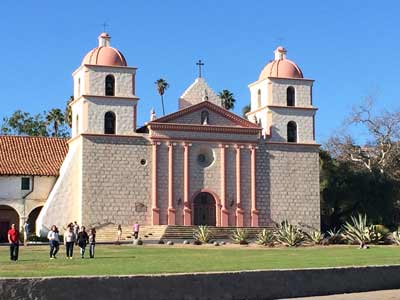 | |||
| Mission Santa Barbara. Quelle: Daniel Thomet 2014 | |||
| 8. Dezember 1787 | Spanische Missionen 1769-1823 - Die Mission La Purisima Concepcion war die elfte von Franziskanermönchen errichtete Mission im heutigen Kalifornien (damals Neuspanien). Die Mission wurde von Pater Fermin Lasuen im heutigen Lompoc gegründet, etwa 60 Meilen nordwestlich von Santa Barbara, Kalifornien. In diesem Gebiet lebten die Chumash-Indianer. Die Chumash bauten Aquädukte, um Wasser vom Ventura River zur Mission zu leiten. Die Chumash lebten in sogenannten 'ap (strohgedeckten Häusern), kuppelförmigen Häusern, deren Gerüst aus jungen, starken Stämmen bestand, die oben zusammengebunden waren. Die 'ap wurden mit Binsen oder Schilf bedeckt. | Chumash | - |
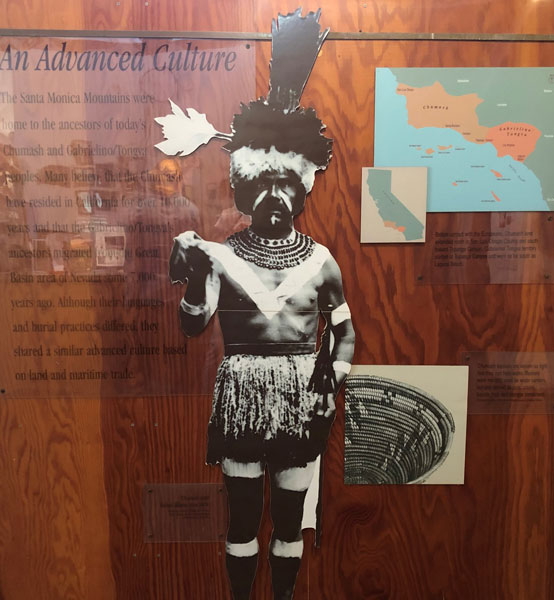 | |||
| Chumash-Indianer. Quelle: Satwiva Native American Cultural Center, Thousand Oaks, Kalifornien | |||
| 19. November 1793 | Nordwestpassage-Expedition 1792 - Der englische Abenteurer George Vancouver erreicht die Anacapa Islands, eine Inselgruppe östlich der Channel Islands, südlich von Santa Barbara, Kalifornien. | Chumash | - |
| Um 1800 | Die Chumash-Indianer lebten im Dorf Wishtoyo in der Nähe des heutigen Malibu in Kalifornien. | Chumash | - |
| 1804 | Juan Bautista de Anza Expedition 1774-1776 - José Bartolomé Tapia war der erste Europäer (Spanier), der sich in der Gegend von Malibu, Kalifornien, niederließ. Im Jahr 1800 beantragte José Bartolomé Tapia als Belohnung für seinen Militärdienst die Zuteilung des Landes, das er als junger Mann als Mitglied der Expedition von de Anza 1775 gesehen hatte. Tapia ließ sich 1804 auf dem Land nieder, um sein Vieh weiden zu lassen und seine Kinder großzuziehen. In der Gegend von Malibu lebten Chumash-Indianer, die bis dahin wenig oder gar keinen Kontakt zu Europäern hatten. | Chumash | - |
| 14. September 1804 | Spanische Missionen 1769-1823 - Als 19. spanische Mission wurde die Mission Santa Ines von Pater Estevan Tapis in der Nähe der heutigen Stadt Solvang gegründet. In diesem Gebiet lebten die Chumash-Indianer. Es war die fünfte und letzte Mission, die auf dem Gebiet der Chumash-Indianer errichtet wurde. | Chumash | - |
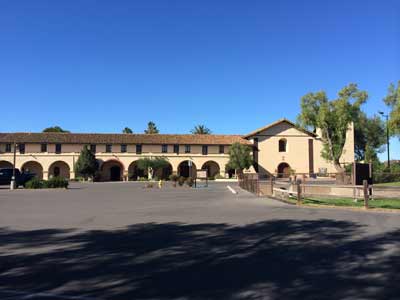 | |||
| Mission Santa Ines. Quelle: Daniel Thomet 2014 | |||
| 1806 | Der steigende Wasserbedarf für die 1786 erbaute Mission Santa Barbara und die Dürrejahre 1794 und 1795 führten 1806 zum Bau eines Wasserreservoirs neben der Mission und 1807 zum Bau eines Staudamms und eines Aquädukts. Der Staudamm befand sich auf dem Gelände des heutigen Botanischen Gartens von Santa Barbara. Ein Aquädukt leitete das Wasser zu den Reservoirs neben der Mission. 1808 wurde ein weiterer Aquädukt im nahe gelegenen Rattlesnake Canyon gebaut. Chumash-Indianer führten die Bauarbeiten unter Anleitung von Franziskanermönchen aus. | Chumash | - |
| 1831 | 2788 Chumash-Indianer waren in den spanischen Missionen in Kalifornien registriert. | Chumash | - |
| 1853 | Edward F. Beale, Federal Superintendent of Indian Affairs for California, errichtete 1853 das erste Indianerreservat in Kalifornien. In der Reservation lebten Missionsindianer, Chumash und Paiute. | Chumash Paiute | - |
| 1900 | 100 Chumash-Indianer leben noch in Kalifornien. | Chumash | - |
| 1952 | Der letzte reinrassige Chumash-Indianer, Tomas Ygnacio Aquino, ist gestorben. | Chumash | - |
| August 2003 | Eröffnung des Chumash Casino in Santa Ynez. | Chumash | - |